
Madurai, February 03, 2026: Advanced targeted and precision therapies, which act selectively on cancer cells while sparing healthy tissue unlike conventional chemotherapy, have significantly improved treatment tolerability, outcomes, and survival rates, while enhancing the quality of life of both adult and paediatric patients with blood cancers, experts from the Department of Adult Hematology and Pediatric Oncology at Meenakshi Mission Hospital and Research Centre said.
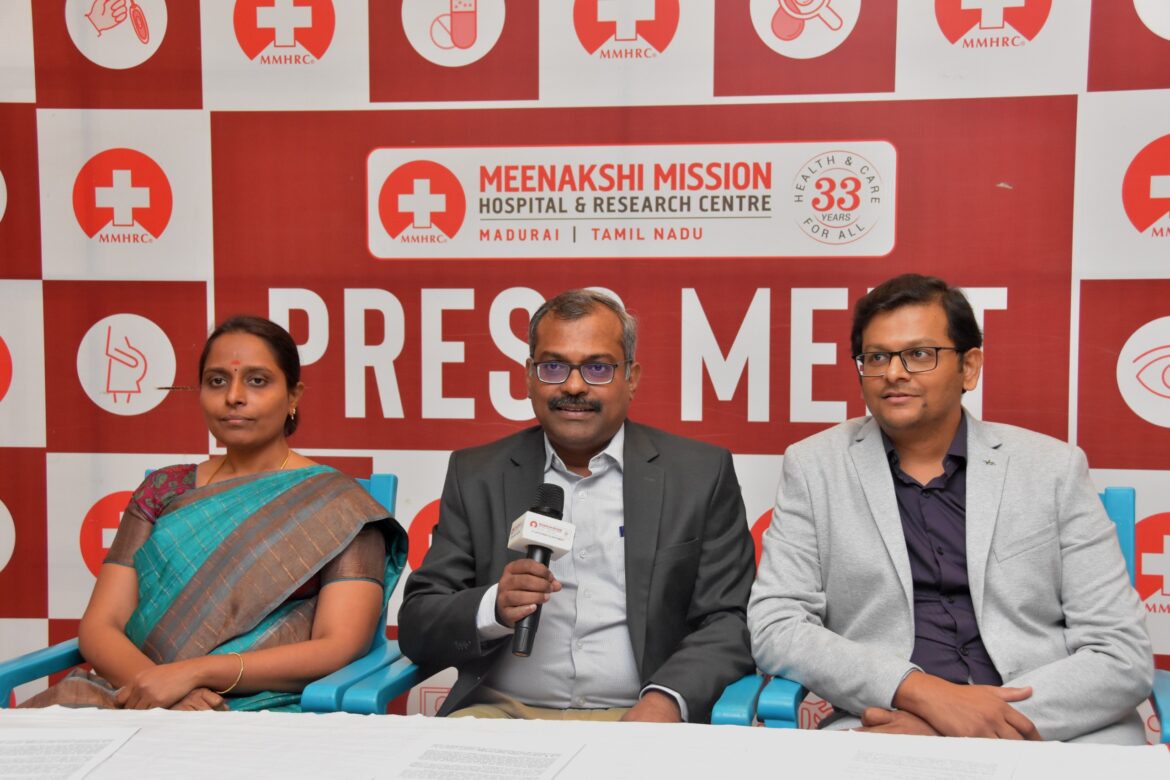
Addressing the press meet organised in connection with World Cancer Day, observed on February 4, the experts said that conventional chemotherapy traditionally relies on high-dose cytotoxic drugs to destroy rapidly dividing cancer cells, but often results in significant side effects, including severe infections, organ toxicity and prolonged hospital stays, particularly among older or medically fragile patients. In contrast, targeted therapies such as inotuzumab act directly on cancer cells while sparing healthy tissues, resulting in better tolerability, fewer complications, improved treatment outcomes, and a better quality of life for patients.
In his comments, Dr. T. Kasi Viswanathan, Senior Consultant and HOD – Hemato Oncology, said, “In acute leukemia, conventional chemotherapy works by broadly destroying fast-growing cells, including healthy ones, which is why older patients often struggle to tolerate it. Targeted therapy, on the other hand, is designed to recognise and attack leukemia cells specifically, reducing toxicity while improving effectiveness.
He noted that the department treats both adult and paediatric patients with blood cancers, including acute leukemia, a common and aggressive form of the disease, using advanced targeted therapies. Among adult patients, five of the seven treated with targeted therapy are currently alive and leading healthy lives. In the paediatric age group, particularly among children aged 1 to 18 years, the department has managed several cases of refractory acute leukemia, where treatment options are often extremely limited. The use of advanced immunotherapies such as inotuzumab and blinatumomab has enabled four out of five children to achieve remission and thrive, underscoring the transformative potential of precision-based therapies even in very young patients.
Dr. R. M. Annapoorani, Pediatric Hemato-Oncologist, commented: “Inotuzumab is a specially engineered antibody-drug conjugate. It is carefully prepared to recognise a protein present on leukemia cells. Once it binds to the cancer cell, the drug is internalised and delivers a toxic payload directly inside the leukemia cell, leading to its destruction while minimising damage to normal cells. This precision has allowed us to offer hope in refractory pediatric leukemia where very little existed before.”
Dr. V. Anitha, Pediatric Hemato-Oncologist,remarked: “So far, more than 1,000 children and adolescents aged 1 to 18 years with acute leukemia, including acute lymphoblastic leukemia (ALL) and acute myeloid leukemia (AML), aggressive, rapidly progressing forms of blood cancer, have been treated at our center. Our overall survival outcome is around 80%, which is a significant achievement and reflects consistent, protocol-based care across all pediatric age groups.”
Dr. V. S. Venkateswaran, Pediatric Hemato-Oncologist, added: “While the majority of patients can be cured with chemotherapy and targeted therapy, about 20% of children require bone marrow transplantation, which is a highly specialised treatment. Our center has performed more than 400 bone marrow transplants, with outcomes ranging from 70% to 80%. MMHRC is proud to be the first Bone Marrow Transplant (BMT) center in South Tamil Nadu, offering this life-saving procedure close to home.”
Dr. B. Kannan, Medical Administrator, was also present during this event.
Established in 2010, the Department of Adult Hematology and Pediatric Oncology at Meenakshi Mission Hospital and Research Centre has, over the past decade, grown into a centre of excellence, delivering advanced targeted therapies on par with international standards and enabling patients from Madurai and surrounding regions to access cutting-edge cancer care locally, without the need to travel abroad.
Blood cancer awareness and latest treatment update
Population-based cancer registry data from the ICMR show that blood cancers occur at an incidence of approximately 4–5 per lakh population per year in India.
There are two main types of acute leukaemia:
Acute Lymphoblastic Leukaemia (ALL)
Acute Myeloid Leukaemia (AML)
In children with acute leukaemia, ALL is the predominant subtype, accounting for nearly 80% of cases, while AML constitutes about 20%.
In contrast, among adults with acute leukaemia, AML is more common (around 80%), with ALL accounting for about 20%.
Acute leukaemia is the most common cancer in children, contributing to 30–40% of all childhood cancers. Encouragingly, with modern treatment protocols, 80–90% of children with ALL can be cured.
Chemotherapy remains the cornerstone of treatment for acute leukaemia. However, in certain situations—such as high-risk disease, relapse, lack of response to chemotherapy, or in patients with poor fitness due to advanced age or comorbidities involving the kidney, heart, or liver—targeted therapies provide an effective alternative.
Targeted therapies have a better safety profile and often produce deeper and more precise responses, leading to improved outcomes in patients who are otherwise difficult to treat.
At Meenakshi Mission Hospital and Research Centre, we utilise state-of-the-art treatment modalities, including chemotherapy, targeted therapy, and haematopoietic stem cell transplantation, to ensure optimal outcomes for patients with blood cancers.
We are the first centre in Southern Tamil Nadu to initiate bone marrow transplantation, starting in 2015. To date, we have performed over 450 bone marrow transplants, achieving outcomes comparable to international standards, with an overall cure rate of approximately 70% in blood cancers.
One of the latest advances in the treatment of leukaemia is the use of novel targeted antibody-based therapies such as blinatumomab and inotuzumab. These drugs act selectively on cancer cells—either by recruiting the patient’s own immune cells to destroy the cancer or by delivering a toxic payload directly into the leukaemia cells, sparing normal tissues.
Our experience in treating both children and adults with blood cancers using these advanced therapies has resulted in excellent clinical outcomes, reinforcing our commitment to delivering cutting-edge, patient-centred cancer care.