
Chennai, 13 April 2026: Demonstrating an exceptional deep expertise in keyhole surgery and gastroentology, VS Hospitals saved a woman with a rare combination of three life-threatening conditions: a massive 30-cm enlarged spleen due to hereditary spherocytosis, a diseased gallbladder, and liver cirrhosis with a high risk of turning cancerous.
Avoiding open surgery, the team, performed a “double keyhole” procedure to remove both diseased organs, the spleen weighing over 2 kg, a “sleeping giant” in the abdomen, and a gallbladder filled with stones. The laparoscopic removal of a 30-cm spleen marks a significant advancement in minimally invasive surgery, enabling the patient to avoid a large surgical incision.
The minimally invasive procedure was carried out as a synchronous laparoscopic intervention, with strategic port placement enabling both the splenectomy, surgical removal of the spleen, and cholecystectomy, removal of the gallbladder, to be performed with keyhole incisions.
Prior to surgery, they also administered targeted antivirals that successfully cleared the Hepatitis C virus, the underlying cause of the patient’s liver cirrhosis and a known risk factor for hepatocellular carcinoma, a serious form of liver cancer and liver cirrhosis.
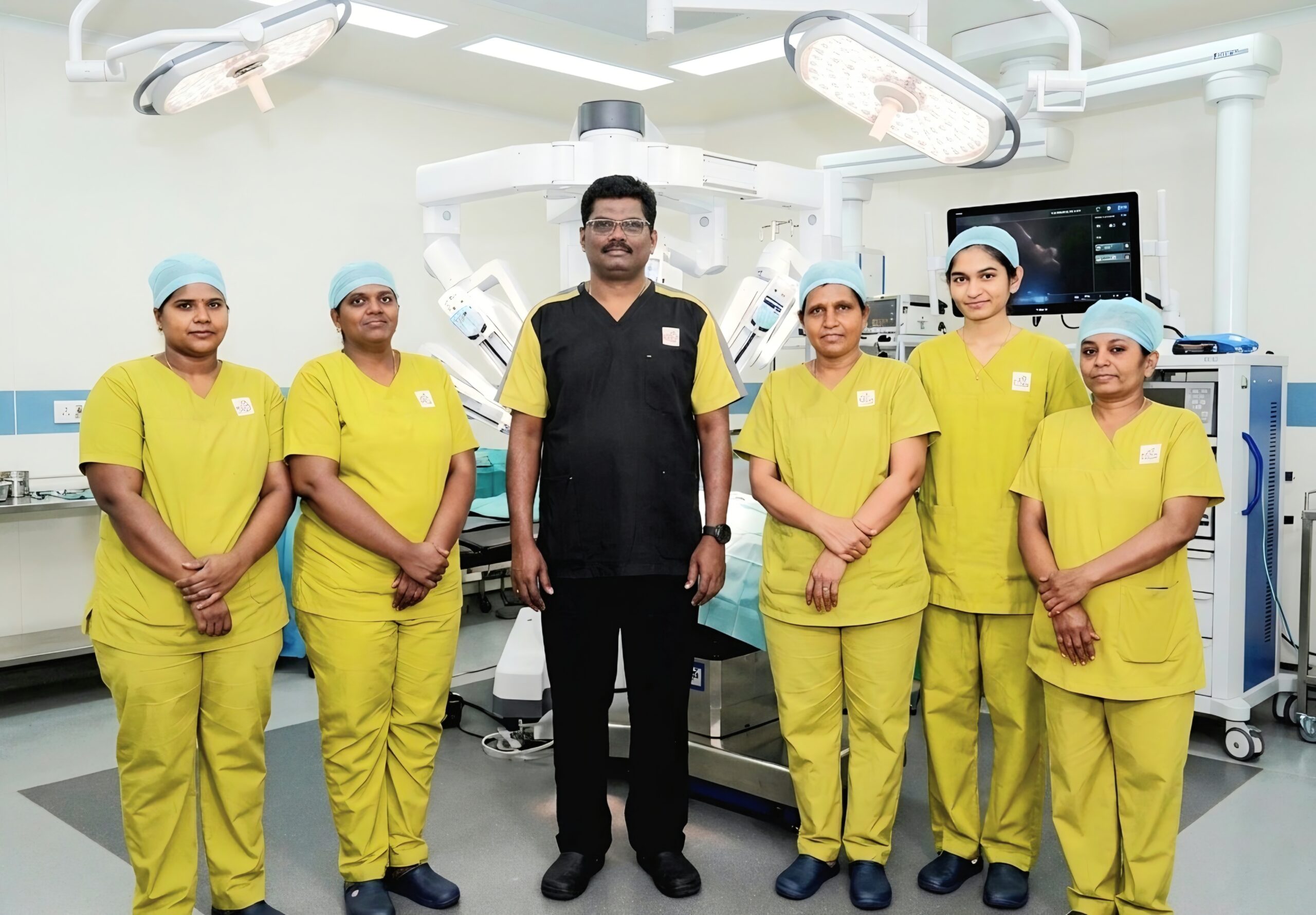
The keyhole procedure was performed by a team led by Dr. J. Saravanan, Clinical Lead Senior Consultant and Surgical Gastroentologist, while antiviral therapy was managed by Dr. Mohammad Ali, Medical Gastroenterologist.
In his comments, Dr. J. Saravanan said, “The primary challenge was the spleen’s size was 30 centimetres, which typically necessitates open surgery, further complicated by gallstones in a fragile cirrhotic liver. Removing the gallbladder in such patients is high risk, requiring exceptional precision to dissect it from a scarred liver bed while navigating the nearby enlarged spleen. Despite this, we successfully removed both organs without a large incision, often requiring 20–25 cm. The keyhole approach provided 5 times magnification, and control needed for a safe and successful outcome.”
The team adopted an important technique of artery-first approach, initially securing the splenic artery to reduce spleen size and improve surgical access. This facilitated auto-transfusion of approximately 750 ml to 1 litre of blood back into the patient, minimising the need for external transfusion. The procedure also halted the destruction of red blood cells and eliminated the risk of future gallbladder-related complications.
Dr. Mohammad Ali, Medical Gastroenterologist, added, “Eliminating the Hepatitis C virus prior to surgery helped stabilise the liver and prevent progression to cancer, ensuring a safer outcome. Before surgery even began, the patient had already overcome a critical hurdle, as the advanced antiviral therapy cleared the virus from the system. This effectively halted the risk of liver cancer and preparing the patient for a successful procedure and surgery”
This case highlights timely medical and surgical management in gastroenterology combined with advanced minimally invasive surgical techniques requiring deep expertise.