
Chennai, March 24, 2026: The All India uPVC Profile Manufacturers Association (AIUPMA) has sounded a serious alarm over the rapid rise of imported uPVC window profiles into India, warning that the domestic manufacturing ecosystem is facing severe pressure due to unfairly priced imports, predominantly from China.
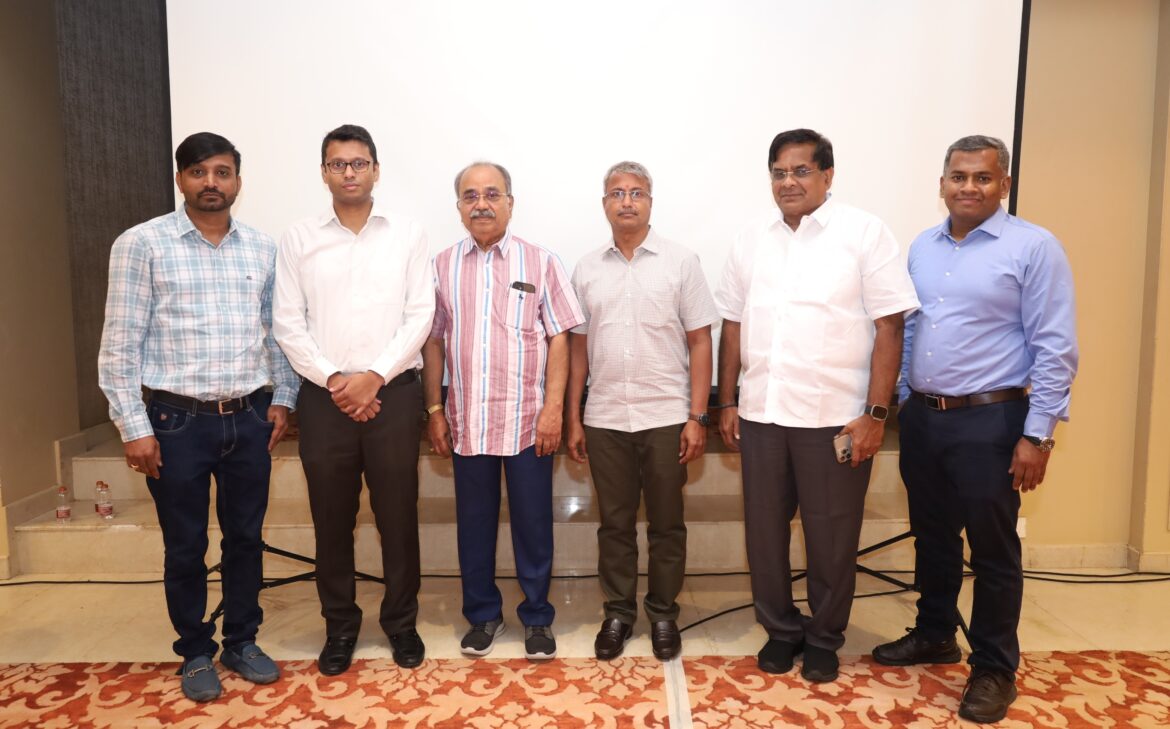
At a national-level press and media conference held in Chennai, Mr. Arokiaswamy, Founder President; Mr. Eniyan Shivam, President; Mr. Vinod, Vice President; Mr. Sanjay, Vice President; Mr. Senthil Murugan, Treasurer; and Mr. Ram Kumar, Joint Secretary, stated that 1.6 lakh metric tonnes of uPVC window profiles were imported into India in 2025 alone, with 99% of these imports originating from China.
Addressing the media, Mr. Eniyan Shivam, President, said that the association formed by profile manufacturers from across India—urges both the government and the public to take note of the serious challenges currently faced by the industry.
Imported profiles from China are being sold in the Indian market at prices lower than the cost of raw materials required for domestic production, severely impacting local manufacturers. Over the past three years, imports from China have steadily increased year after year.
As a result, the market share of Indian manufacturers has dropped below 50%. If this trend continues, the sustainability of the domestic industry will be at serious risk.
A key reason for this situation is the high anti-dumping duty imposed on raw materials when imported into India. However, when these same raw materials are processed into finished products in China and exported to India, they attract significantly lower duties, giving Chinese products a major pricing advantage in the Indian market.
Furthermore, many imported products are of inferior quality and tend to deteriorate within two to three years. This has led to a loss of customer trust and a decline in demand for high-quality products manufactured domestically.
“If this situation persists, manufacturing in India may become unviable, and the vision of ‘Make in India’ risks turning into merely ‘Sell in India’,” he added.
The association strongly urged the government to provide necessary recognition and a protective environment for the industry, emphasizing the need to ensure that only quality products enter the Indian market.
Key demands of AIUPMA include:
• Mandatory implementation of BIS certification for all relevant products
• Introduction of a Minimum Import Price (MIP) for low-quality imports from China
• A comprehensive review of the Anti-Dumping Duty (ADD) structure to support domestic manufacturers
The association requested both the Central and State Governments to urgently consider these demands and take necessary steps to safeguard India’s manufacturing sector.
AIUPMA pointed out that Chinese imports have now captured 51% of the Indian uPVC window profile market, while the share of Indian manufacturers has fallen to 49%. This shift marks a critical tipping point for the industry, as domestic manufacturers continue to lose ground year after year.
The association further highlighted that these imports are being sold at prices significantly below domestic production cost and, in many cases, even below raw material cost. This has created a deeply uneven playing field, making it extremely difficult for local manufacturers to compete and sustain operations.
As a direct consequence, Indian manufacturers are currently operating with nearly 57 % idle manufacturing capacity, resulting in underutilized plants, financial stress, and growing uncertainty across the value chain.
AIUPMA warned that without immediate policy intervention, the long-term viability of India’s uPVC manufacturing ecosystem could be seriously threatened.AIUPMA has therefore urged the Government of India to take immediate corrective action by initiating an anti-dumping duty investigation, implementing safeguard measures on finished uPVC profile imports, and strengthening quality enforcement at ports to ensure fair competition and protect the domestic industry.
The association emphasized that urgent intervention is necessary not only to support Indian manufacturers and MSMEs but also to protect the livelihoods of lakhs of people associated with the sector, including workers engaged in extrusion, fabrication, installation, hardware, logistics, and allied industries.
Highlighting recent developments, AIUPMA noted that the issue was raised in Parliament by Erode MP K. E. Prakash, bringing national attention to the serious challenges confronting the domestic uPVC profile manufacturing sector.
The Chennai media conference forms part of AIUPMA’s broader effort to create awareness among stakeholders, policymakers, and the public about the urgent need for timely and effective policy action to safeguard domestic manufacturing and restore a level playing field.